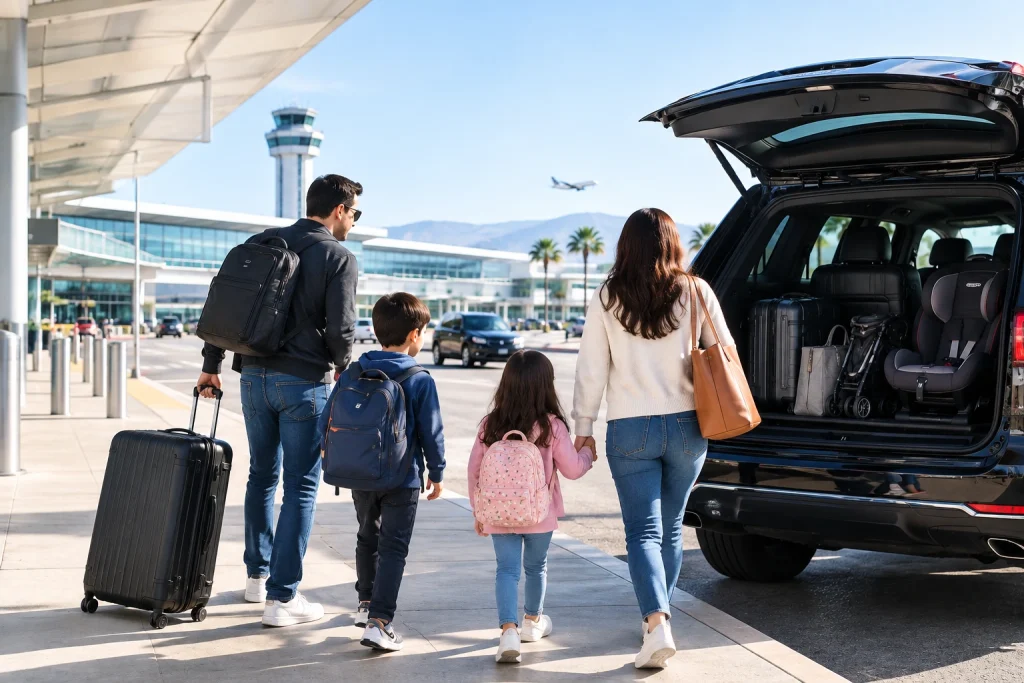


Long-distance private transportation is a smart choice in 2026 because it removes the fatigue, parking stress, and schedule risk that come with driving yourself or relying on shared options. A professional driver handles the road, you keep your time, and the whole group arrives together and ready to go. This guide covers the costs, risks, and alternatives most travelers weigh before they book a long ride from Redlands.
Table of Contents
- Quick Answer: Key Takeaways
- Why Long Trips Wear You Down Faster Than You Expect
- What Long-Distance Private Transportation Includes in 2026
- Cost Analysis: Driving Yourself vs. Hiring a Driver
- Time Analysis: Typical Trips From Redlands
- Safety and Fatigue: Why a Rested Driver Matters
- Comfort, Productivity, and Group Benefits
- Who Benefits Most From a Hired Driver
- Why Demand Is Rising in 2026
- Alternatives Compared: Rideshare, Rental Car, Train, and Charter Bus
- Risks and Limits to Check Before You Book
- Local Notes for Redlands Travelers
- How to Book in Five Steps
- Conclusion: Is Long-Distance Private Transportation Worth It?
- Frequently Asked Questions
Quick Answer: Key Takeaways
- Fatigue is the hidden cost of long drives. Federal estimates tie drowsy driving to roughly 800 deaths a year, and many experts think that count runs low.
- Your own car is not free. AAA puts the average cost to own and run a new vehicle at $12,863 a year in 2026.
- A hired driver turns drive time into rest, work, or conversation time for everyone in the group.
- Private rides cost more than a rideshare on short hops, so the value rises with distance, group size, and schedule pressure.
Why Long Trips Wear You Down Faster Than You Expect
Distance changes the math. A short drive across town is a chore. A 200-mile trip is a full workday that happens to include a destination.
The National Highway Traffic Safety Administration estimates that drowsy driving is involved in about 91,000 police-reported crashes each year. Those crashes cause roughly 50,000 injuries and 800 deaths. NHTSA’s drowsy driving research also notes that some experts believe the true toll is higher, because fatigue is hard to prove after a crash.
Timing matters too. NHTSA says drowsy driving crashes cluster between midnight and 6 a.m. and again in the late afternoon. Anyone heading home on the I-10 after a long weekend event is driving straight into that second dip.
Add stop-and-go traffic, unfamiliar exits, and a car full of tired passengers. The driver works hard the whole way, even if it feels like a normal drive. That is the gap long-distance private transportation is built to close.
What Long-Distance Private Transportation Includes in 2026
In plain terms, long-distance private transportation means a pre-booked vehicle and a vetted driver who take your group from your door to your destination. You set the pickup time, the route, and the plan for the return. Nobody else shares the cabin.
The ride usually comes in a few common formats:
- One-way transfers to an airport, hotel, or event venue.
- Round trips where the driver waits or returns at an agreed time.
- Hourly standby for trips with several obligations along the way.
- Scheduled group runs for weddings, tournaments, and corporate retreats.
Most operators price these by distance, time, vehicle class, and wait time. Reviewing the full range of limo and chauffeur services helps you match the format to your plan before you ask for a quote.
A good booking should spell out the following in writing:
- The pickup address, the drop-off address, and the estimated drive time.
- The vehicle class, plus passenger and luggage limits.
- Wait-time rules, overtime rates, and gratuity policy.
- Cancellation and change terms.
Clear terms are the first sign that a company treats long-distance private transportation as a planned service and not a last-minute favor.
Cost Analysis: Driving Yourself vs. Hiring a Driver
Most travelers compare the quote to the price of gas. That comparison is too narrow. AAA’s Your Driving Costs study for 2026 puts the average annual cost of owning and operating a new vehicle at $12,863, or about $1,072 a month. Depreciation alone averages $4,422 a year.
Those figures cover ownership, so they overstate what one trip costs you. The variable part is smaller. AAA’s 2025 data put fuel at 13.0 cents a mile and maintenance at about 11 cents a mile. That is roughly 24 cents per mile before tolls, parking, and wear.
Take a 220-mile one-way trip, or 440 miles round trip. At 24 cents a mile, the variable cost is about $106. Add parking, tolls, and any rental or airport fees, and the number climbs. That is the honest baseline a private quote must beat on value, not just on price.
Value is where long-distance private transportation changes the comparison. You also pay for hours you do not spend driving, a lower fatigue risk, and one fewer vehicle to park. These are the costs people tend to overlook.
| Cost item | Driving yourself | Hiring a driver |
|---|---|---|
| Fuel and wear | You pay per mile | Built into the quote |
| Parking | You pay and search | Often handled by the driver |
| Fatigue risk | Rises with hours at the wheel | Driver stays alert, you rest |
| Designated driver | One person misses the best moments | Everyone joins in |
| Return timing | Set by your energy level | Set by your schedule |
Group size also shifts the math. Your own car looks cheap for two people. Split a single vehicle quote across six passengers, and the per-person gap narrows quickly. Ask for an all-in number and divide it by the seats you actually fill.
One more tip: ask whether the quote includes tolls, fuel, and wait time. A low headline price with add-ons can cost more than a flat all-in rate for long-distance private transportation.
Time Analysis: Typical Trips From Redlands
Distance numbers are easy to find. Real travel time is harder, because Southern California traffic changes by the hour. The table below uses rounded estimates for common routes. Treat them as planning ranges, not promises.
| Destination | Approx. distance | Typical drive time | Common reason to go |
|---|---|---|---|
| Palm Springs | 55 miles | 1 to 1.5 hours | Festivals, golf, weekends away |
| LAX | 70 miles | 1.5 to 3 hours | Flights |
| San Diego | 105 miles | 2 to 3 hours | Cruises, conferences |
| Santa Barbara | 135 miles | 2.5 to 4 hours | Weddings, wine country |
| Las Vegas | 220 miles | 3.5 to 5.5 hours | Shows, conventions |
Look at how wide those ranges are. A drive to LAX may take 90 minutes at midday and three hours on a bad afternoon. A driver who tracks live traffic can leave earlier and reroute on the fly. That is hard to do while you manage the wheel and the GPS yourself.
Productive time is the real prize on longer routes. On a four-hour Las Vegas run, a passenger can answer email, review a presentation, or nap. Over a round trip, that is up to eight hours of focus you would never get at the wheel. This is the strongest argument for long-distance private transportation on business trips.
Safety and Fatigue: Why a Rested Driver Matters
Rest rules exist for a reason
Federal rules show how seriously regulators treat driver fatigue. Under the FMCSA hours-of-service rules, passenger-carrying commercial drivers may drive up to 10 hours after 8 consecutive hours off duty. Those limits apply to interstate carriers. The logic still helps on any trip, because rested drivers make safer calls.
A professional operator plans trips with rest in mind. When you book long-distance private transportation, ask how the company schedules drivers on multi-hour runs and who covers a very long day. A good answer is specific. A vague answer is a warning.
What a trained driver adds
A trained driver knows the local choke points, the safest staging areas, and the best way around a closure. That knowledge matters on routes with weather risk, such as the Cajon Pass on the way to Las Vegas, where wind and winter conditions can change quickly.
Vehicle readiness matters as well. Reputable operators keep vehicles on regular inspection and maintenance schedules. Ask any provider how often vehicles are checked, and ask to see proof of insurance and permits. Responsible companies expect those questions.
The safety case does not mean private cars are unsafe. It means the right comparison is a tired amateur driver against a rested professional. For long-distance private transportation, that difference is the main benefit.
Comfort, Productivity, and Group Benefits
Comfort is not a luxury add-on on long routes. It affects how you feel when you arrive. Legroom, climate control, and a quiet cabin all matter after two hours, let alone five.
Groups gain the most. Everyone travels in one vehicle, arrives at one time, and skips the shuttle shuffle at the other end. Wedding parties, sports families, and corporate teams avoid the “who drives back” debate.
Vehicle choice shapes the experience. You can compare luxury fleet options by capacity, luggage space, and comfort level before you decide. Matching the vehicle to your headcount keeps the quote fair and the ride comfortable.
Event timing is another benefit. A driver can drop you at the entrance, handle the return plan, and be ready when the night ends. Nobody has to decide whether they are fit to drive home. Many people value that peace of mind above every other feature of long-distance private transportation.
Who Benefits Most From a Hired Driver
Some travelers see a bigger payoff than others. These groups tend to gain the most.
Business travelers
Time is the main currency. A client trip to Las Vegas or San Diego can become a mobile office, and arriving fresh helps the meeting itself. For executives, long-distance private transportation protects both the schedule and the first impression.
Families and multigenerational groups
Grandparents, kids, and luggage make a heavy load for one driver. A single vehicle with a rested driver keeps the group together and lowers stress for everyone. Families with older relatives often find that long-distance private transportation makes a trip possible when a long drive would be too much.
Event and celebration groups
Weddings, milestone birthdays, and tournaments share one risk: people driving home tired or after celebrating. A planned ride removes that decision. Groups choose long-distance private transportation for the same reason they book a venue, to remove the guesswork.
Why Demand Is Rising in 2026
Costs and habits both explain the shift. AAA’s 2026 study puts ownership above $12,800 a year. AAA also notes that its method changed, so the figure is not directly comparable with last year’s. Even so, the number pushes people to think harder about how they use their own car on long trips.
Travel habits are changing too. Many travelers now blend work and leisure, move in larger groups for events, and value a predictable arrival time. Those habits favor long-distance private transportation, because it offers a fixed pickup, a fixed vehicle, and a clear plan.
Expectations around transparency have also risen. Travelers read reviews, compare quotes, and ask pointed questions before they book. That is healthy. It rewards operators who publish clear terms and answer questions directly.
Alternatives Compared: Rideshare, Rental Car, Train, and Charter Bus
Private transportation is not the only way to cover distance. Each option wins in some situations. The table shows where each one fits.
| Option | Best for | Main drawback |
|---|---|---|
| Your own car | Solo trips on a tight budget | Fatigue, parking, and wear |
| Rental car | Flexible multi-day plans | Fees, insurance, and you still drive |
| Rideshare | Short local hops | Surge pricing and uncertain long-route availability |
| Train or bus | Budget travel on fixed corridors | Fixed schedules and transfers |
| Private driver | Groups, business, and events | Higher upfront price |
Rideshare deserves a closer look. It works well across town. On long trips, availability and pricing become unpredictable, and some drivers may not accept a distant destination. You also cannot count on booking the same driver for the return.
Charter buses win on very large groups. Below that size, long-distance private transportation usually offers more flexible timing and door-to-door pickup.
Public transit costs less. It also demands more planning, more waiting, and more luggage handling. If time or comfort matters, the savings shrink fast.
Risks and Limits to Check Before You Book
No option is perfect, and a good provider will say so. Here are the main risks to weigh.
- Cost on short or solo trips. A private driver is rarely the cheapest choice for one person on a quick run.
- Peak dates. Holidays, graduations, and major events fill calendars early, so late requests may not find the right vehicle.
- Traffic still exists. A driver reduces stress and improves routing, but nobody can erase a freeway closure.
- Unclear quotes. Vague pricing, hidden fees, and unverified permits are the most common red flags.
Licensing deserves its own check. In California, passenger carriers that charge for rides fall under the California Public Utilities Commission, and legitimate operators share permit details on request. Learning about our team and company standards is one example of the transparency to expect from any provider.
Use this short checklist before you commit to long-distance private transportation:
- Ask for the permit number and proof of insurance.
- Request an all-in written quote.
- Confirm the vehicle class and luggage space.
- Read the cancellation and delay policy.
- Share the full itinerary, including flight numbers or event times.
Local Notes for Redlands Travelers
Redlands sits at a useful crossroads. The I-10, the 210, and the I-215 connect you to Los Angeles, Orange County, Palm Springs, and the high desert. That access is a plus. It also means heavy commuter traffic at predictable times.
Ontario International Airport is one of the closest major airports, and many travelers use it for domestic flights. Longer international departures often point toward LAX or San Diego, where distance and timing need extra planning.
Seasonal patterns matter locally. Summer heat raises breakdown risk, winter storms affect mountain passes, and holiday weekends clog the I-15 corridor to Nevada. Planning the departure window around those patterns is one of the easiest ways to improve any long trip.
Local knowledge also helps with pickups. Residential streets, gated communities, and hotel entrances each have their own access quirks. Drivers who work this area daily plan for them. That is a quiet advantage of choosing a Redlands-based provider for long-distance private transportation.
How to Book in Five Steps
- Define the trip. Write down dates, pickup and drop-off points, passenger count, and luggage.
- Choose the format. Decide between one-way, round trip, or hourly standby.
- Pick the vehicle. Match the class to your group and luggage.
- Request a written quote. Send your details through the contact form to request a custom long-distance quote.
- Confirm the day before. Recheck times, phone numbers, and flight details.
Booking early gives you the most vehicle and driver options. For holiday weekends and major events, plan to reach out several weeks ahead when possible. The homepage of Redlands Limo Service is a good starting point to see what is available. If you want more planning help, the limo planning guides on our blog cover related trip questions.
When you book early and give clear details, long-distance private transportation runs smoothly from the first pickup to the last drop-off.
Conclusion: Is Long-Distance Private Transportation Worth It?
For most groups and most longer routes, yes. Long-distance private transportation costs more than driving yourself on paper, but it returns hours, rest, and predictability that the odometer never captures. The case is strongest when the group is larger, the route is long, or the schedule has no slack.
If you are comparing options for a trip in 2026, start with the facts. Know what the trip costs you in time and fatigue, what the quote includes, and who sits behind the wheel. Ask for the permit and insurance details, get the terms in writing, and book early. A provider that answers calmly is usually the one worth hiring.
Frequently Asked Questions
How far counts as a long distance for a private driver?
There is no single industry cutoff. Many travelers treat trips beyond 50 miles, or longer than an hour, as long-distance private transportation. Quotes often shift to a distance-based or hourly structure at that point. Ask the provider how it defines a long trip.
Is private transportation cheaper than driving myself?
Not always. On fuel alone, driving yourself usually costs less. Once you add parking, tolls, wear, and the value of your time, the gap narrows, especially for larger groups.
How far ahead should I book?
Book as early as your plans allow. Holiday weekends, graduations, and large events fill quickly, so several weeks of notice gives you the best choice of vehicles and drivers.
Can the driver wait while I attend an event?
Often, yes. Many providers offer hourly standby or a scheduled return pickup. Confirm the wait-time rules and overtime rates in writing before the trip.
Is a hired driver actually safer on long trips?
A rested professional driver lowers the fatigue risk that affects many long drives. Safety also depends on the operator, so ask about permits, insurance, and vehicle inspections. Those checks matter for any long ride you book.
What should I ask before I book?
Ask for the permit number, proof of insurance, an all-in written quote, the cancellation policy, and the vehicle class. Share your full itinerary so the quote matches the real trip.
Can I bring luggage or pets?
Policies vary by vehicle and operator. Share your luggage count and any pets when you request the quote, so the company can assign the right vehicle.
Stay Connected With Redlands Limo Service